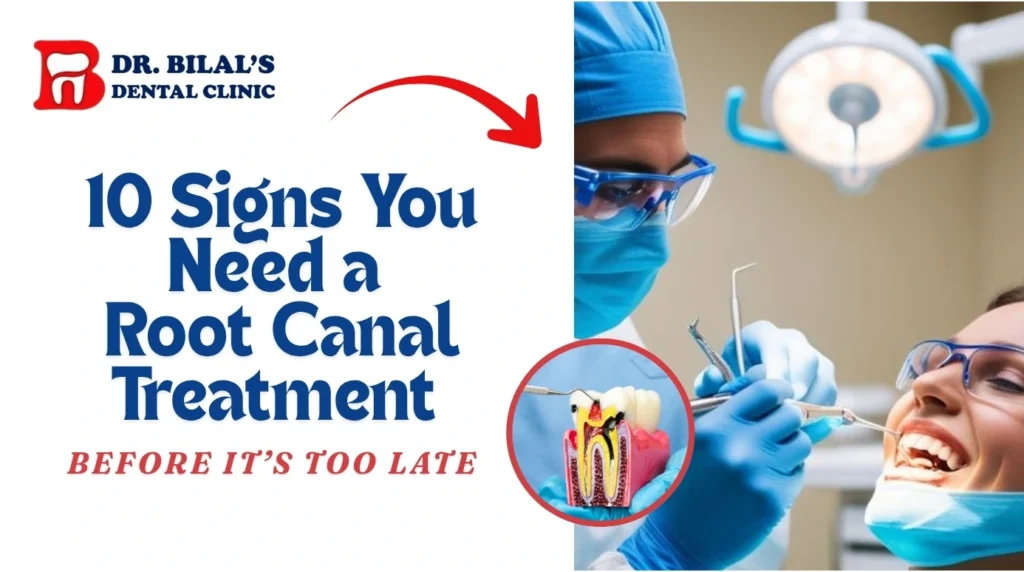
Ignoring a toothache can lead to severe dental complications, including tooth loss. In many cases, persistent tooth pain is a sign that the inner pulp of the tooth has become infected or damaged. A Root Canal Treatment (RCT) is one of the most effective ways to save a natural tooth and eliminate pain without extraction.At DR. BILAL’S DENTAL CLINIC, Dr. Bilal Shaikh (B.D.S., M.D.S.) provides advanced and painless Root Canal Treatment in Pune using modern technology and patient-friendly techniques. If you notice any of the warning signs below, don’t delay seeking professional dental care.
What Is Root Canal Treatment?
A root canal treatment is a dental procedure that removes infected or inflamed pulp from inside the tooth. The canals are thoroughly cleaned, disinfected, filled, and sealed to prevent further infection. Finally, the tooth is restored with a filling or dental crown to regain its strength and function.
Modern root canal procedures are comfortable, highly successful, and help preserve your natural smile.
1. Persistent Tooth Pain
One of the most common signs that you may need a root canal is continuous tooth pain. The discomfort may be mild at first but can gradually become severe. Pain may occur while chewing, biting, or even without any apparent reason.
If your toothache lasts for more than a day or two, it’s essential to visit a Root Canal Specialist in Pune immediately.
2. Sensitivity to Hot and Cold
Do your teeth hurt when drinking hot coffee or eating ice cream? Temporary sensitivity is common, but if the pain lingers long after the temperature stimulus is gone, it may indicate nerve damage inside the tooth.
Persistent thermal sensitivity often suggests that the dental pulp has become infected and requires immediate treatment.
3. Swollen or Tender Gums
Swelling around a painful tooth is another warning sign. The gums may appear red, inflamed, or tender to touch. In some cases, swelling may spread to the jaw or face if the infection worsens.
Ignoring swollen gums can allow bacteria to spread deeper into surrounding tissues.
4. Dark or Discolored Tooth
A tooth that suddenly becomes gray, brown, or darker than the surrounding teeth could indicate internal damage or loss of blood supply to the pulp.
Internal discoloration is often associated with infected or dying tooth nerves and should be examined by a dentist as soon as possible.
5. Pain While Chewing
If biting down causes sharp pain or discomfort, the infection may have reached the root of the tooth. The inflammation increases pressure inside the tooth, making chewing painful.
Early diagnosis can prevent the need for more extensive dental procedures.
6. A Small Pimple on the Gums
A recurring pimple-like bump near the affected tooth, known as a dental abscess or fistula, often drains pus from an underlying infection.
This is a serious sign that the infection has spread beyond the tooth and requires immediate root canal treatment.
7. Cracked or Chipped Tooth
A cracked, fractured, or chipped tooth allows bacteria to enter the pulp chamber, increasing the risk of infection.
Whether the damage occurred during sports, an accident, or by biting hard foods, prompt dental evaluation is recommended to prevent permanent damage.
8. Deep Tooth Decay
Untreated cavities gradually penetrate deeper layers of the tooth. Once decay reaches the pulp, simple fillings are no longer sufficient.
A root canal becomes necessary to remove the infected tissue and preserve the remaining healthy tooth structure.
9. Tooth Feels Loose
Advanced infection can weaken the supporting bone surrounding the tooth, causing it to feel slightly loose.
Although loose teeth are commonly associated with gum disease, pulp infection can also contribute to tooth mobility.
10. Facial Swelling or Severe Tooth Infection
When the infection progresses significantly, it may cause swelling of the face, jaw, or neck. Some patients also experience fever, swollen lymph nodes, or difficulty opening the mouth.
This is considered a dental emergency and requires immediate professional treatment.
Why You Shouldn’t Delay Root Canal Treatment
Postponing treatment allows bacteria to spread deeper into the root and surrounding bone. Delayed treatment may result in:
- Severe tooth pain
- Dental abscess formation
- Bone infection
- Tooth extraction
- Higher treatment costs
- Spread of infection to nearby teeth
Early intervention helps save your natural tooth while avoiding unnecessary complications.
Benefits of Root Canal Treatment
Choosing timely root canal treatment offers numerous advantages:
- Saves your natural tooth
- Eliminates severe tooth pain
- Stops the spread of infection
- Restores normal chewing function
- Improves oral health
- Prevents tooth extraction
- Long-lasting results with proper care
- Preserves your natural smile
Why Choose DR. BILAL’S DENTAL CLINIC?
Patients across Pune trust DR. BILAL’S DENTAL CLINIC for advanced dental care because of:
- Experienced care by Dr. Bilal Shaikh (B.D.S., M.D.S.)
- Modern painless root canal procedures
- Digital diagnosis and precision treatment
- Sterilized and hygienic environment
- Personalized treatment plans
- Affordable consultation and treatment
- Friendly patient care
- Convenient appointment scheduling
Whether you need a single-visit or multiple-visit root canal, our clinic focuses on delivering comfortable, effective, and long-lasting results.
Tips to Prevent Root Canal Treatment
While not every case is preventable, you can reduce your risk by:
- Brushing twice daily with fluoride toothpaste
- Flossing every day
- Visiting your dentist every six months
- Treating cavities early
- Wearing a mouthguard during sports
- Avoiding chewing hard objects like ice or pens
- Limiting sugary foods and beverages
Regular dental checkups help detect problems before they become painful emergencies.
Frequently Asked Questions (FAQs)
1.Is Root Canal Treatment painful?
Modern root canal treatment is performed under local anesthesia and is generally no more uncomfortable than getting a dental filling.
2.How long does a root canal take?
Most treatments are completed in one or two visits, depending on the severity of the infection.
3.What happens after a root canal?
The treated tooth is usually restored with a filling or crown to protect it and restore normal function.
4.Can a root canal save my natural tooth?
Yes. Root canal treatment is specifically designed to remove infection while preserving your natural tooth whenever possible.
5.How do I know if I need a root canal?
Persistent tooth pain, prolonged sensitivity, swelling, discoloration, and pain while chewing are among the most common signs. A dental examination and X-ray can confirm the diagnosis.
Book Your Consultation Today
If you’re experiencing any of these symptoms, don’t wait until the pain becomes unbearable. Early treatment can save your natural tooth and prevent costly dental complications.
DR. BILAL’S DENTAL CLINIC offers advanced Root Canal Treatment in Pune with a patient-first approach.
Dr. Bilal Shaikh (B.D.S., M.D.S.)
Schedule your appointment today and take the first step toward a healthier, pain-free smile.
Call: +91 9579868680
Address: 2nd Floor, K Raheja Vista Centerpoint,NIBM Road, Shankarrao Madhukar Ghule Patil Road,Mohammed Wadi, Pune, Maharashtra 411060